Italy and Switzerland warn of autonomous AI hacking agents
CSIRT Italia and the Swiss NCSC name ARTEX, CyberStrikeAI, DeepSeek Harness and PentAGI; Swiss officials urge patching internet-facing flaws within 24 hours.
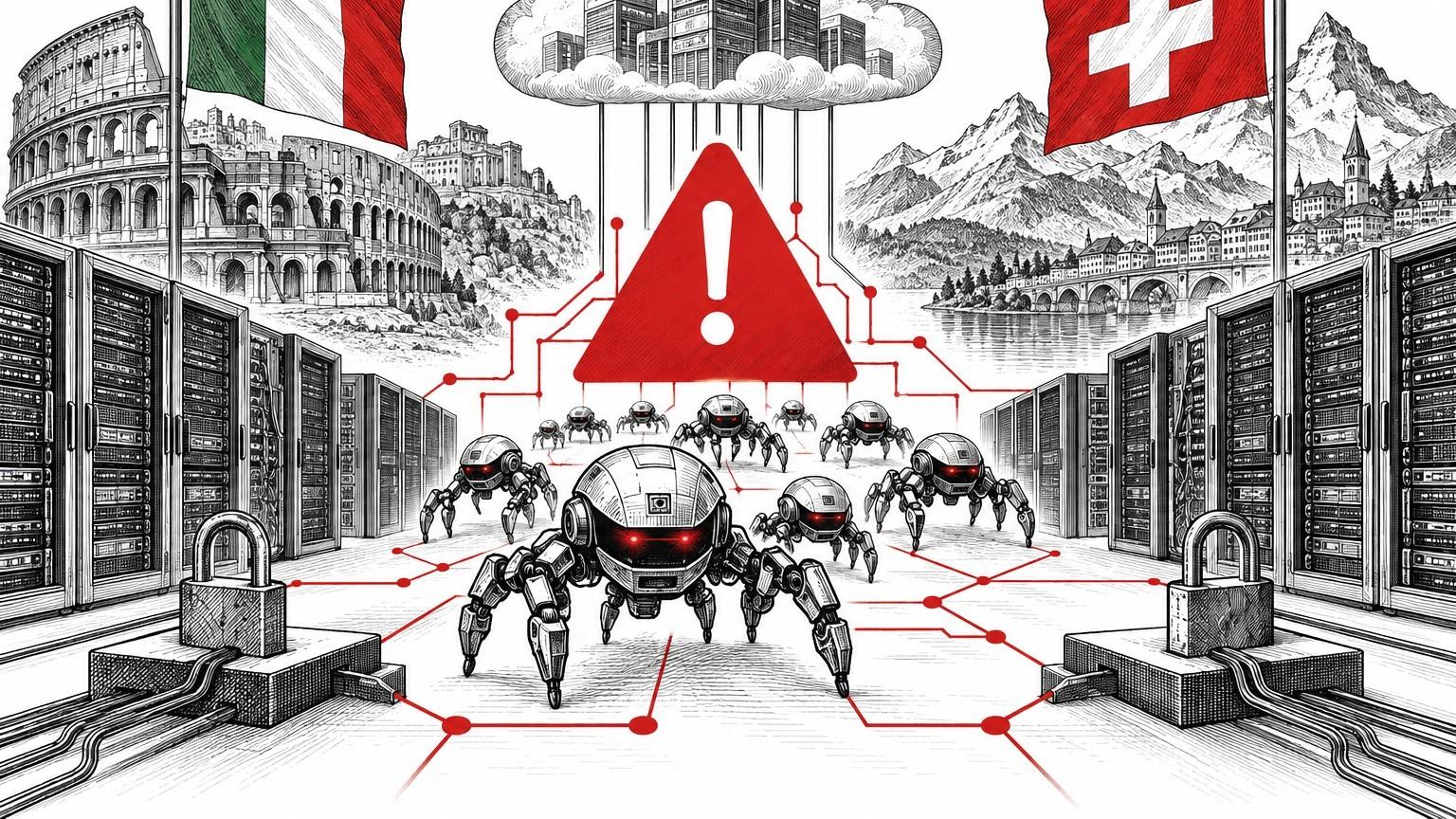
CSIRT Italia said in its bulletin that it detected mass compromise campaigns in Italy orchestrated by autonomous AI agents. BleepingComputer reported that the Swiss National Cyber Security Centre received its first reports of cyberattacks in Switzerland involving an AI agent, affecting organisations and critical infrastructure operators in at least two sectors. In all cases known to the Swiss agency, the agents achieved a successful compromise of the victim's IT systems. MLQ.ai reported on Thursday that the Italian document appeared on the evening of Nov. 23 with a critical rating, enumerates 81 CVEs and publishes indicator feeds for the activity.
The Italian bulletin names four frameworks: ARTEX, CyberStrikeAI, DeepSeek Harness in Red Team mode, and PentAGI. CSIRT Italia described the DeepSeek Harness setup as coordinating six agents: a planner plus agents for information gathering, reconnaissance, vulnerability identification, exploitation, and penetration and persistence. The coordinator reviews results after each phase and decides next steps, while an operator can direct the system through a web interface using natural-language commands to set a target perimeter, exclude systems, or stop activity, according to the bulletin. BleepingComputer reported that CSIRT Italia said the observed agents carried out complex, sustained activity to detect misconfigurations, linked low-impact vulnerabilities into attack chains, and adapted their modules. The outlet added that the agents generated malicious code in real time to bypass endpoint defenses.
The Swiss NCSC said in its advisory that the agents exploited weak passwords and known vulnerabilities in internet-exposed endpoints, using offensive frameworks that search for weaknesses, select tools and plan next steps on their own. The agency said the number of publicly available AI agents "has almost doubled since October 2026" and that it "anticipates an increase in the number of rapid and successful cyberattacks," according to MLQ.ai. NCSC advised administrators to apply critical updates to internet-facing systems "no later than 24 hours after release," add multi-factor authentication or passkeys to webmail, VPN and other internal resources exposed to the internet, and enforce least privilege, according to the advisory.
CSIRT Italia's bulletin asked organizations to prioritize patching internet-facing systems for the actively exploited CVEs in its list, and to disconnect or segment those systems if immediate patching is not possible. The document advises removing management consoles, APIs and CI/CD interfaces from direct internet exposure, protecting identities with least privilege and multi-factor authentication, replacing long-lived secrets with temporary credentials, watching authentication sources, control-plane operations and outbound server traffic, and keeping offline or unchangeable backups. It also states that the tolerance for technical debt "is no longer sustainable from a security standpoint," according to the bulletin. The agency published MISP feeds with indicators and YARA rules, noting that AI-agent infrastructure changes quickly and indicators should be considered valid only for the timeframe in the feed, according to the bulletin.
Sources: ACN, BleepingComputer, MLQ.ai
Lena Vasquez covers vulnerabilities, breaches and identity for Five Nines. She writes from advisories, vendor bulletins and published reporting.
Corrections. Report an error to corrections@thefivenines.com. We list substantive corrections on the corrections page.