OCP 2026 pushes open standards for agentic AI data centers
Nvidia opened its Vera Rubin rack and compute tray designs, joined AMD, Google and Meta on a power and cooling specification, and worked with Google, Meta and Microsoft on grid resilience.
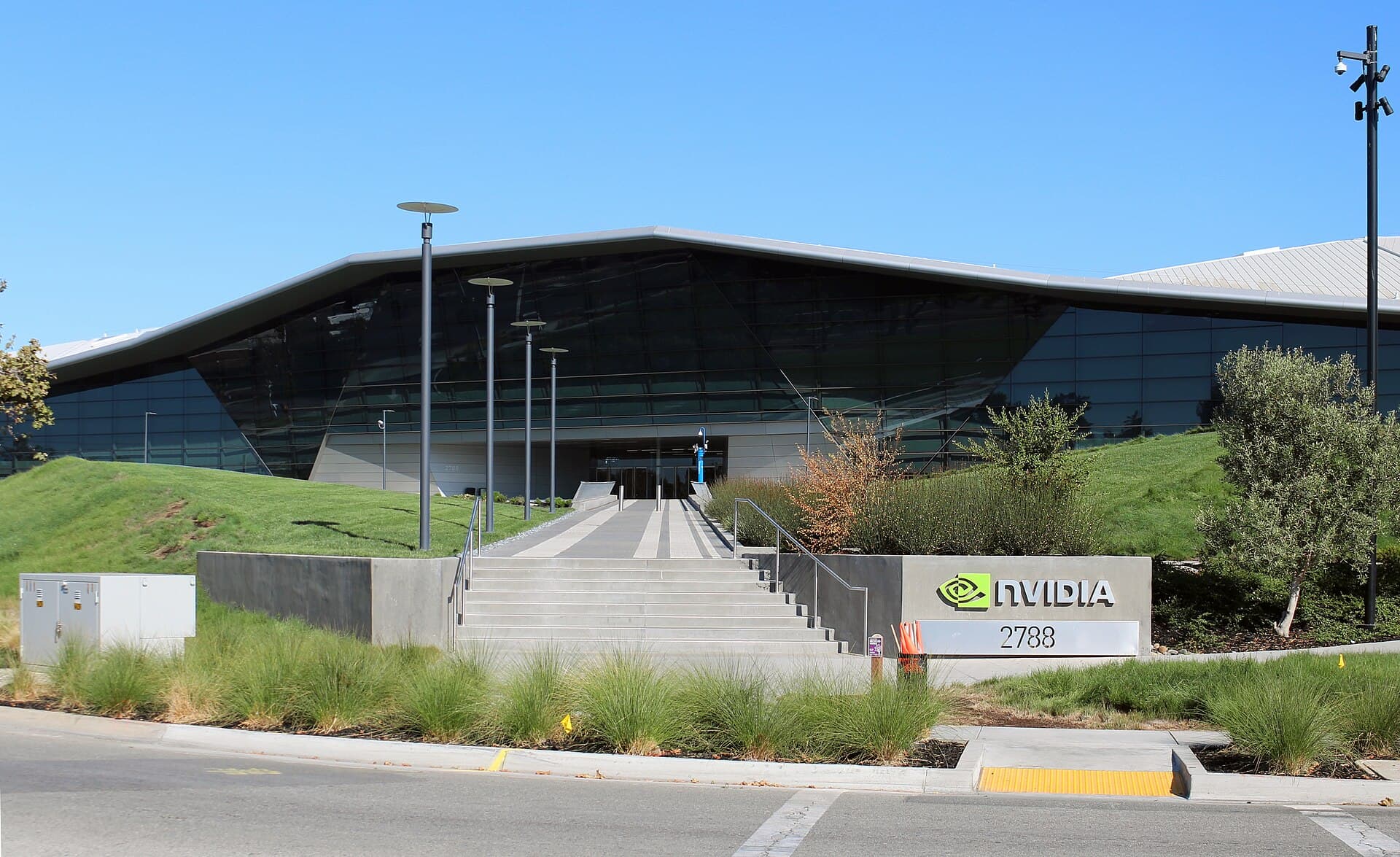
At the 2026 OCP Global Summit, chipmakers and hyperscalers contributed open specifications for AI data centre infrastructure. The work spans rack-scale compute trays, power and cooling interfaces, networking, and grid response standards, with contributions from Nvidia, AMD, Google, Meta and others.
August: modular data centre standards
At the 2026 OCP Korea Tech Day in Seoul on 21 August, IA proposed that OCP revise its 'expanded 300kW MDC' standard from 2019. IA said AI servers with many GPUs and NPUs have higher power density and heat than the designs that older standard assumed. The company also unveiled NeoCube, a modular AI data centre reference design that combines power and cooling infrastructure with GPU and NPU accelerators, private cloud, and AI platform services. IA presented a draft efficiency metric called PF-eq for measuring AI computation against facility power, and said it was not an official OCP standard. The company said it was building a 25 kW proof-of-concept facility and planned to scale to 100 kW, with design-to-construction within three months.
October: open specs at the Global Summit
QuantumScape announced on 8 October that it had joined OCP and launched the QS PowerBlock, a solid-state lithium-metal battery for AI data centres. The company said the unit delivers quadruple the power density and five times the operating time of current industry standards, uses 800 VDC architecture, and smooths power fluctuations in compact data centre designs.
On 12 October, at the 2026 OCP Global Summit in San Jose, QCT announced two server platforms built around AMD's upcoming EPYC 9006 Series processors. The QuantaGrid D76W-2U is a 2U system with full liquid cooling and an 8-GPU baseboard built for agentic AI workloads, and the QuantaGrid S46V-1U is a single-socket 1U server with up to 600 W TDP and sixteen DDR5 memory channels. AMD said the new processors give customers a broad set of workload-optimised options for enterprise, cloud and AI, from one server to multi-gigawatt rack-scale builds.
The same day, Nvidia said it had opened its Vera Rubin rack and compute tray designs as MGX blueprints for system builders. Nvidia said the MGX 1.2 update supports racks up to 250 kW with liquid cooling and standardised power and cooling connections, and includes a Vera CPU rack design for AI agent workloads such as tool calling and orchestration.
Nvidia said it worked with AMD, Google and Meta to publish version 0.7 of the Open Data Center Specification. That document sets common requirements for power, cooling and facility layout. A separate OCP Grid Resilience Specification from Google, Meta, Microsoft and Nvidia sets a target for AI facilities to recover from grid failures and reach nearly full load within two seconds.
Meta is adopting Nvidia's Spectrum-6 Ethernet switches, which Nvidia said offer 102.4 terabits per second of switching capacity, double the capacity of Spectrum-4. The companies are advancing Spectrum-X Multiplane technology, which Nvidia said can distribute GPU traffic across up to eight network planes and help AI factories scale beyond 100,000 GPUs. Nvidia also said Google plans to support Falcon Transport on Nvidia's next-generation ConnectX-10 SuperNIC and BlueField DPU.
Nvidia and Cisco announced an ultra-dense small form-factor pluggable optical module called USFP. Nvidia said the design reaches 400 gigabits per second per lane and gives four times the bandwidth density of optics that run at 200 Gbps per lane. TE Connectivity and Amphenol are participating in component development.
Where the standard work stands
The Open Data Center Specification was published at version 0.7, and IA said its PF-eq metric was not an official OCP standard. QuantumScape said it joined OCP to help set standards. Nvidia began shipping its Vera Rubin platform in August. Supermicro announced Vera Rubin rack shipments on 23 September, and CoreWeave said one week later that customers had operational workloads running on the system.
Sources
- Data centres require close regulation, Terrace Standard
- AI "Change AI Data Center Power and Cooling Standards", 매일경제
- QuantumScape launches QS PowerBlock, a solid-st..., Pluang
- QCT Debuts New Server Platforms Powered by AMD at the 2026 OCP Global Summit, Democrat and Chronicle
- Google and Meta turn back to Nvidia tie-up on AI networking hardware, DigitalToday
- NVIDIA opens AI data centre designs as it pushes for industry-wide standards, Economic Times
Arjun Mehta covers data centres, AI infrastructure and networks for Five Nines. He writes from company announcements, filings and published reporting.
Corrections. Report an error to corrections@thefivenines.com. We list substantive corrections on the corrections page.