AI infrastructure diversifies beyond Nvidia as GPU refresh risks grow
Neoclouds are adding AMD options and software layers, but law firm Dentons warns that short GPU lifespans can leave custom AI data centers with stranded capital.
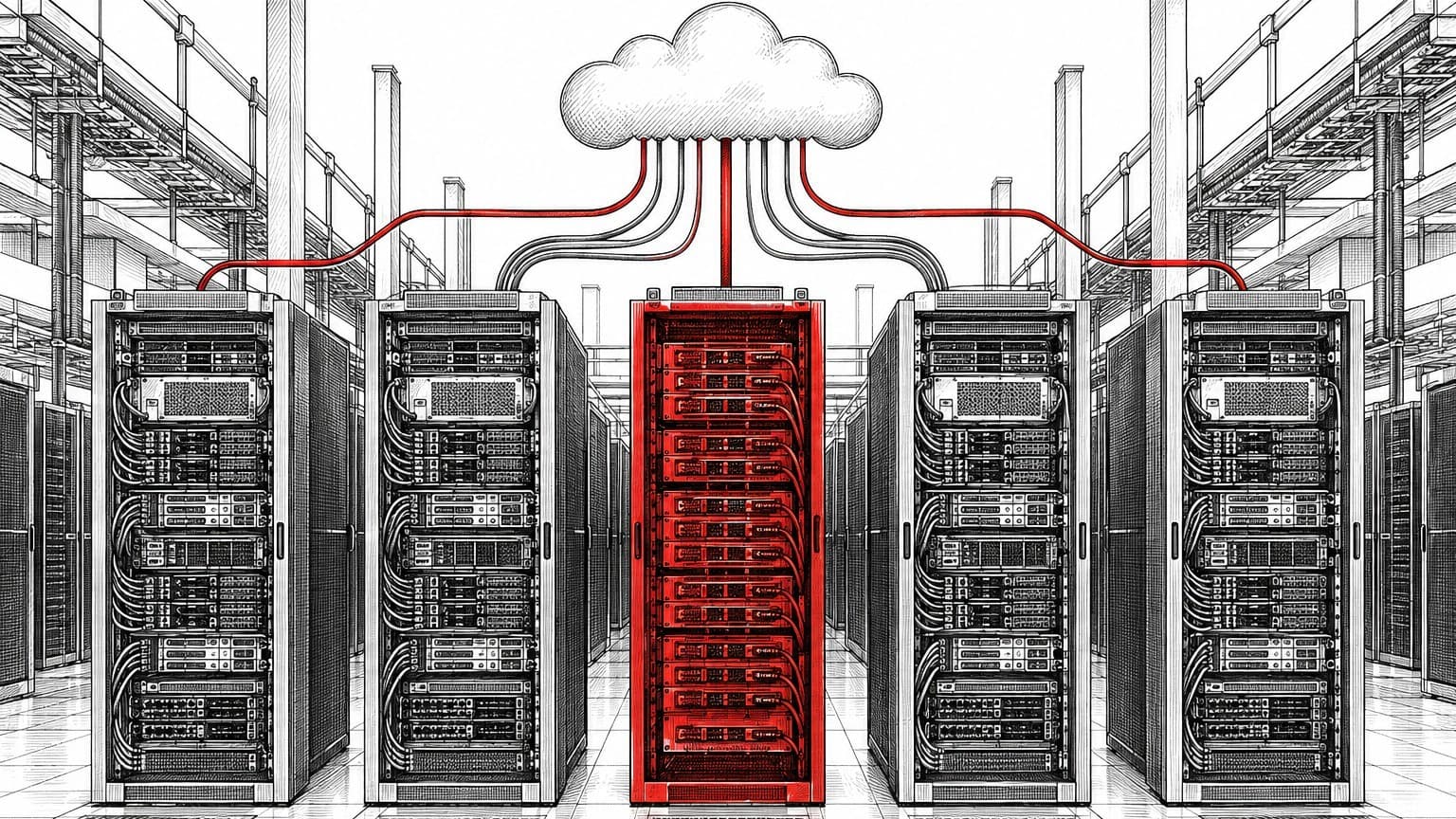
AI infrastructure is moving beyond a pure Nvidia hardware story, but the shift brings a warning about stranded assets. Law firm Dentons said in an Aug. 7, 2026 analysis that AI-optimised data centres, where operators own both the shell and the GPUs and sell compute-as-a-service, create re-leasing and residual-value risk for capital providers because Nvidia's annual chip release cadence can render current-generation facilities obsolete faster than conventional infrastructure depreciation assumes.
From hardware to platform
Dentons described a fourth asset class on Aug. 7, 2026: buildings designed for GPU-heavy training and inference jobs. The core computing hardware typically costs about four times the shell alone. Revenue is tied to utilisation instead of fixed leases, and the counterparties are neoclouds such as CoreWeave, Lambda Labs, Crusoe and Nebius. These providers have shorter contracts, sub-investment-grade credit profiles and depend on Nvidia GPU supply. For Australia, Dentons said the sector is nascent. The leading domestic anchor is CDC's contracted 555MW deployment with an investment-grade US customer, announced in May 2026, and National Electricity Market grid connection lead times act as a hard limit.
On Sept. 11, 2026, CoreWeave argued that AI cloud is more than renting GPUs. The company wrote that customer diversification, including Jane Street, Zonos and Mercado Libre, is an important signal of platform depth beyond raw capacity, not proof. CoreWeave said hardware is still the entry price, but the business is the security, orchestration and tooling built on top.
BigGo Finance reported on Sept. 15 that Crusoe and Perplexity agreed to a multiyear cloud contract under which Perplexity gets Nvidia GB300 chips for model training and production inference from start to finish. Perplexity sought Crusoe specifically for scarce GB300 hardware, according to BigGo. The deal followed Crusoe's roughly $13 billion Jane Street contract earlier in September and positioned Crusoe against CoreWeave and Nebius. BigGo also noted that Crusoe offers AMD processors as an alternative to Nvidia-based clusters.
On Oct. 20, Rafay Systems announced it joined Lenovo AI Innovators to help cloud operators and enterprises turn Lenovo AI infrastructure into revenue-ready AI services. Rafay said the platform supplies controls for isolating tenants, enforcing quotas, self-service access and usage-based billing. The companies cited Australian neocloud Sharon AI as an existing customer using Lenovo infrastructure and Rafay orchestration.
On Oct. 21, Verda and Compal Electronics said they expanded their collaboration at GTC Berlin 2026. Compal will supply servers built on Nvidia HGX B300 systems with eight Blackwell Ultra GPUs. Compal has added factory capacity in Daxi, Taiwan and the United States to help Verda deploy closer to customers. Verda operates AI cloud capacity across Europe, the US and Asia and has raised over $450 million.
Lifecycle risks and financing
Dentons said the customisation that makes AI facilities attractive also creates re-leasing risk. If a neocloud tenant defaults, a high-density GPU site cannot be readily reused for general-purpose computing without swapping GPU-oriented infrastructure for CPU systems and altering cooling, power and network design. When that occurs, the sites could become stranded assets with few alternative uses and low liquidation value.
Dentons reported that Nvidia releases new chip architectures every year. While businesses may write down GPU assets over six years, engineers commonly estimate the usable life at three to four years. Some analysts think the real economic lifespan may be only two years.
Financing is bifurcated. Dentons said facilities backed by long-term hyperscaler commitments can achieve margins around 200 to 250 basis points over benchmark rates, while neocloud-reliant facilities may be priced at 400 to 500 basis points. Hyperscaler backstops, such as Microsoft's commitment to CoreWeave, can wrap a sub-investment-grade revenue stream with investment-grade credit for the duration of the commitment. The shell and the core GPU hardware are typically funded through separate capital stacks. Dentons said how those lender groups interact under stress is now a central legal issue in AI-facility financing.
Sources
- The Australian data centre boom: AI-optimised facilities, neocloud counterparties and the limits of conventional bankability, Dentons
- An AI Cloud Platform Requires More Than Renting GPUs, CoreWeave
- Crusoe Lands Perplexity as Cloud Customer in Multiyear Nvidia GB300 Deal, BigGo Finance
- Rafay Joins Lenovo AI Innovators to Help Cloud Operators and Enterprises Turn Lenovo AI Infrastructure into Revenue-Ready AI Services, Cision PR Newswire
- Verda and Compal Expand Global AI Infrastructure Collaboration at GTC Berlin 2026, PR Newswire UK
Arjun Mehta covers data centres, AI infrastructure and networks for Five Nines. He writes from company announcements, filings and published reporting.
Corrections. Report an error to corrections@thefivenines.com. We list substantive corrections on the corrections page.