Japan declares cyberspace emergency after AI-driven ransomware wave
A single cloud provider breach locked out 495 organizations, and officials say AI is enabling high-volume attacks on legacy systems.
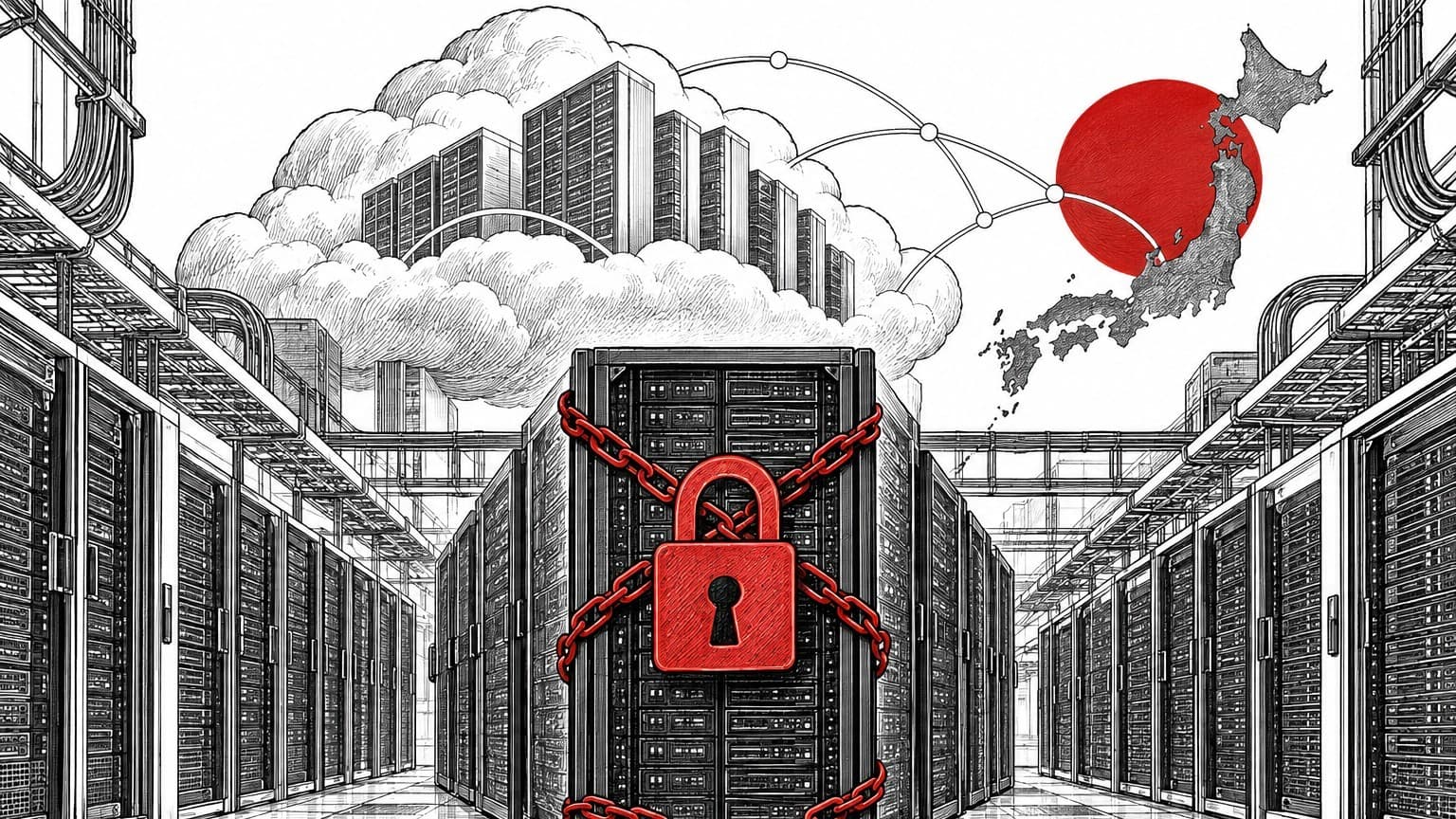
On 9 October, Japan's National Cybersecurity Strategy Headquarters declared a cyberspace emergency after a wave of AI-assisted ransomware and breaches affected more than 14 million people's records and cascaded through 495 cloud customers. IDC Frontier had not named a group, and many affected organizations cannot recover data without their own backups.
How the attacks unfolded
The sequence started before the cloud outage. On 25 September, car-sharing provider Times Car disclosed unauthorized access that compromised 6.6 million members' data, including driver's licence images and identity documents. The Financial Services Agency responded by telling banks not to accept a driver's licence as sole identity verification.
On 26 September, railway operator Keio Corporation confirmed a separate ransomware strike that disrupted business systems across its group.
On 1 October, Japan activated its Active Cyber Defense Law, bringing in mandatory incident reporting and giving authorities power to access and neutralize attacker servers.
On 7 October at 03:40 Japan time (18:40 UTC on 6 October), attackers began a ransomware intrusion at IDC Frontier's IDCF Cloud service, a SoftBank subsidiary. IDC Frontier disconnected East Japan Region 1 and shut down systems, affecting 495 companies and local governments. Named affected organizations included Ibaraki Prefecture and its police headquarters, whose websites went down, and Nissui Logistics, which halted shipments.
On 8 October, IDC Frontier named the affected zones as tesla, henry, pascal and joule, and said customers might need to restore from their own backups. In a console message, attackers claimed to have encrypted 225 databases and 3.6 petabytes of data, gained access to 239 hypervisors, locked 16,000 virtual disks, and deleted 554,153 snapshots; IDC Frontier did not confirm those figures.
Tech Times reported on 12 October that JR East and View Card said up to 6.09 million records may have been exposed through email delivery services on IDCF Cloud. JR Kyushu reported 1.3 million email records, Tokyo Metro 59,000 passenger addresses, and Daiwa Securities up to 220,000 records via a contractor server.
Why AI and cloud concentration matter
The emergency declaration is tied to a shift described by officials and researchers. NCSH head Masaaki Taira told an emergency session: "When AI takes over part of the process, a small group of hackers can target significantly more systems." He called the attacks "saturation attacks". Nobuo Miwa, president of S&J Corp, described the pattern as "carpet bombing".
AI reduces the cost of reconnaissance and can generate convincing Japanese-language lures, removing a language barrier that once protected legacy systems, according to Masaki Hiraoka of Blackpanda. That has made mid-market companies and shared providers viable targets.
IDC Frontier's breach also shows cloud concentration risk: a single provider outage took down nearly 500 unrelated organizations at once, including government sites, railways and logistics. Japan's digital transformation policy pushed consolidation onto cloud providers.
What defenders should check
Defenders with workloads on shared or regional cloud providers should verify that backups exist outside the provider's infrastructure and are tested for restoration, because IDC Frontier told customers their own backups were the only recovery path. They should also review mandatory reporting duties under the Active Cyber Defense Law, which took effect 1 October and requires immediate notification to the National Cybersecurity Office. Multi-vendor redundancy and tenant isolation standards remain open policy questions after the cascade.
Sources
- Ransomware attack disrupts Japan's IDCF Cloud used by govt clients, BleepingComputer
- Ransomware Hits Japan IDCF Cloud, 495 Clients Down [2026], https://tech-insider.org/
- IDC Frontier Ransomware Hits IDCF Cloud, 495 Down, Shattered
- IDCF Cloud: Ransomware hits 495 organizations in Japan, SecNews.gr
- Japan Declares First Cyberspace Emergency as AI Turns Ransomware Into Carpet Bombing, Tech Times
- Japan declares cybersecurity emergency as AI-powered attacks hit 14 million citizens and breach 495 businesses, ET Now
Noor Haddad covers attacks, breach disclosures and exploited vulnerabilities for Five Nines. Noor writes from CISA and vendor advisories, SEC disclosures and published reporting.
Corrections. Report an error to corrections@thefivenines.com. We list substantive corrections on the corrections page.