FCC approves Amazon Leo's $11.5bn Globalstar acquisition
The deal adds about 25 megahertz of Globalstar mobile-satellite spectrum and two dozen satellites, and follows a grant of US market access for the C-3 system.
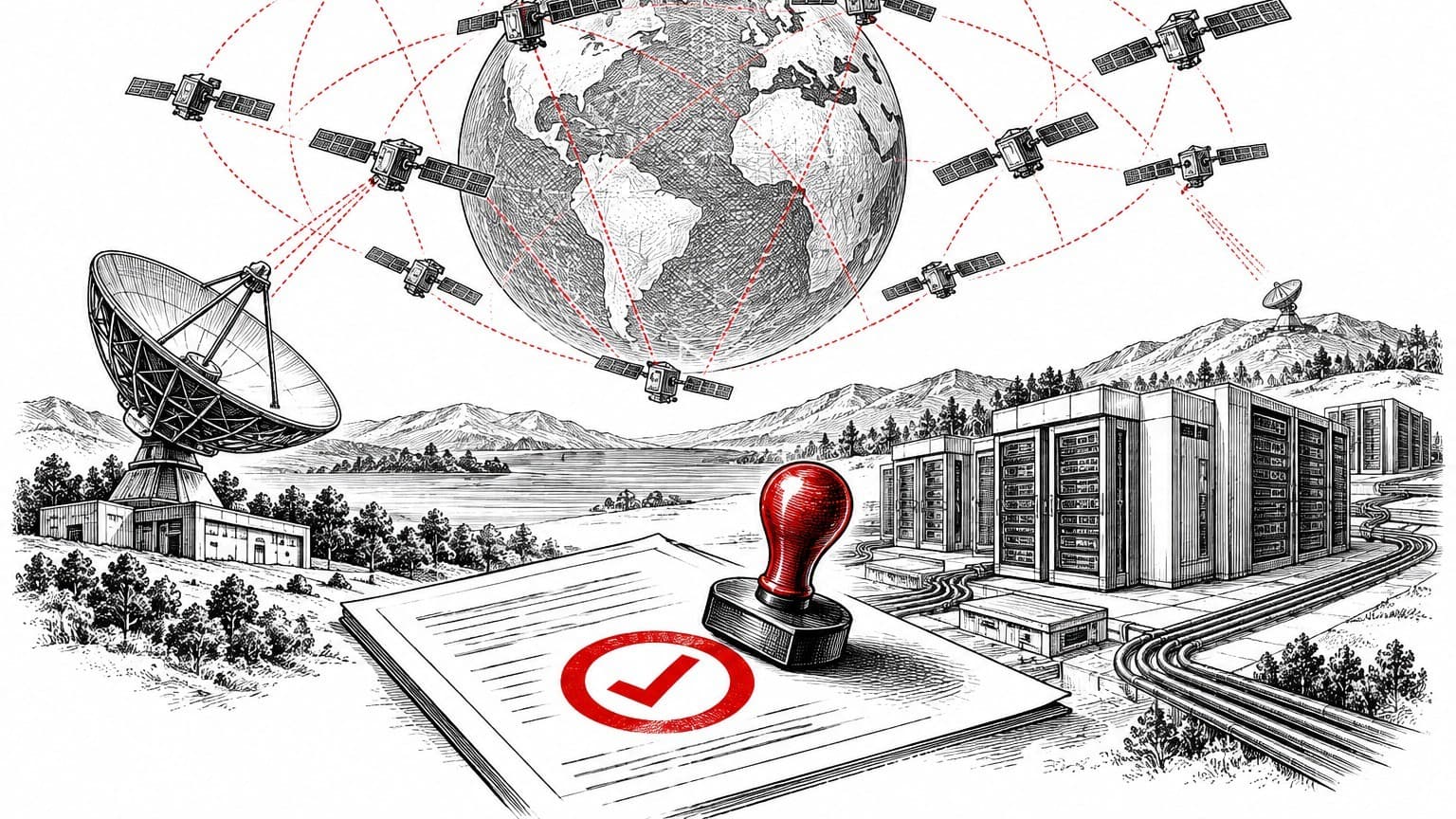
The US Federal Communications Commission approved Amazon Leo's $11.5 billion acquisition of satellite operator Globalstar. The FCC said the firms' complementary assets should improve Amazon Leo's direct-to-device position and produce a stronger satellite operator serving residential, business, and government customers.
Amazon plans to use Globalstar's mobile satellite spectrum and infrastructure to increase capacity and add features, such as connectivity in areas beyond terrestrial wireless networks. The deal brings about 25 megahertz of Globalstar's internationally harmonized mobile-satellite service spectrum and roughly two dozen satellites. Globalstar provides connectivity services to more than 120 countries. Amazon has launched nearly 400 satellites and plans to deploy thousands in low Earth orbit by 2029.
The FCC determined the transaction "is likely to benefit the public by enhancing data coverage in unserved or underserved areas, strengthening emergency communications capabilities, fostering growth in industrial and enterprise data services, and promoting more intensive use of mobile satellite service spectrum." Chairman Brendan Carr said, "By approving this deal, the FCC has empowered Amazon Leo to deliver fast, next-gen satellite broadband services, increase competition, and help communities stay connected all across the country."
Inside Towers reported last week that the Space Bureau granted Globalstar's request for US market access for the non-geostationary C-3 System. The FCC action followed that decision. The system is authorized to operate as a 48-satellite global network arranged in 12 orbital planes with four satellites in each plane, inclined 52 degrees and orbiting at 1,414 kilometers. It is permitted to transmit in the 1610-1618.725 MHz band for Earth-to-space mobile-satellite links and 2483.5-2500 MHz for space-to-Earth links, and has feeder-link and telemetry, tracking, and command frequencies in the 5091-5250 MHz and 6875-7055 MHz bands. After the Globalstar transaction closes, the FCC said Amazon Leo can rely on the C-3 grant to construct and launch the newly authorized constellation.
Amazon is building its Leo satellite network to rival SpaceX's Starlink. The FCC has approved SpaceX's application to deploy 15,000 direct-to-device satellites, and the Space Bureau this year also authorized AST SpaceMobile for a 248-satellite system. Amazon filed in July to deploy up to 5,105 of its Leo direct-to-device satellites. US carriers AT&T, T-Mobile US and Verizon earlier this month formed a direct-to-device satellite-focused spectrum-pooling joint venture.
DatacenterDynamics reported that Apple holds a 20 percent stake in Globalstar after a November 2024 equity deal worth about $400 million, and Apple agreed to provide $1.1 billion in cash to expand iPhone satellite services. Under that agreement, Globalstar allocated 85 percent of its network capacity to Apple. Amazon and Apple said they have a separate agreement under which Amazon Leo will provide satellite connectivity for iPhone and Apple Watch features such as Emergency SOS via satellite.
Sources
- FCC approves Amazon Leo's $11.5bn acquisition of Globalstar, DatacenterDynamics
- FCC approves Amazon Leo's $11.5B acquisition of satellite operator Globalstar, setting up a new satellite connectivity battle with Elon Musk's SpaceX, The Times Of India
- FCC OKs Amazon Leo’s $11.5B Purchase of Globalstar, Inside Towers
Arjun Mehta covers data centres, AI infrastructure and networks for Five Nines. He writes from company announcements, filings and published reporting.
Corrections. Report an error to corrections@thefivenines.com. We list substantive corrections on the corrections page.